

I. The Aurelius Trap
Consider the stories of three leaders, each considered peerless in his domain.
Rome
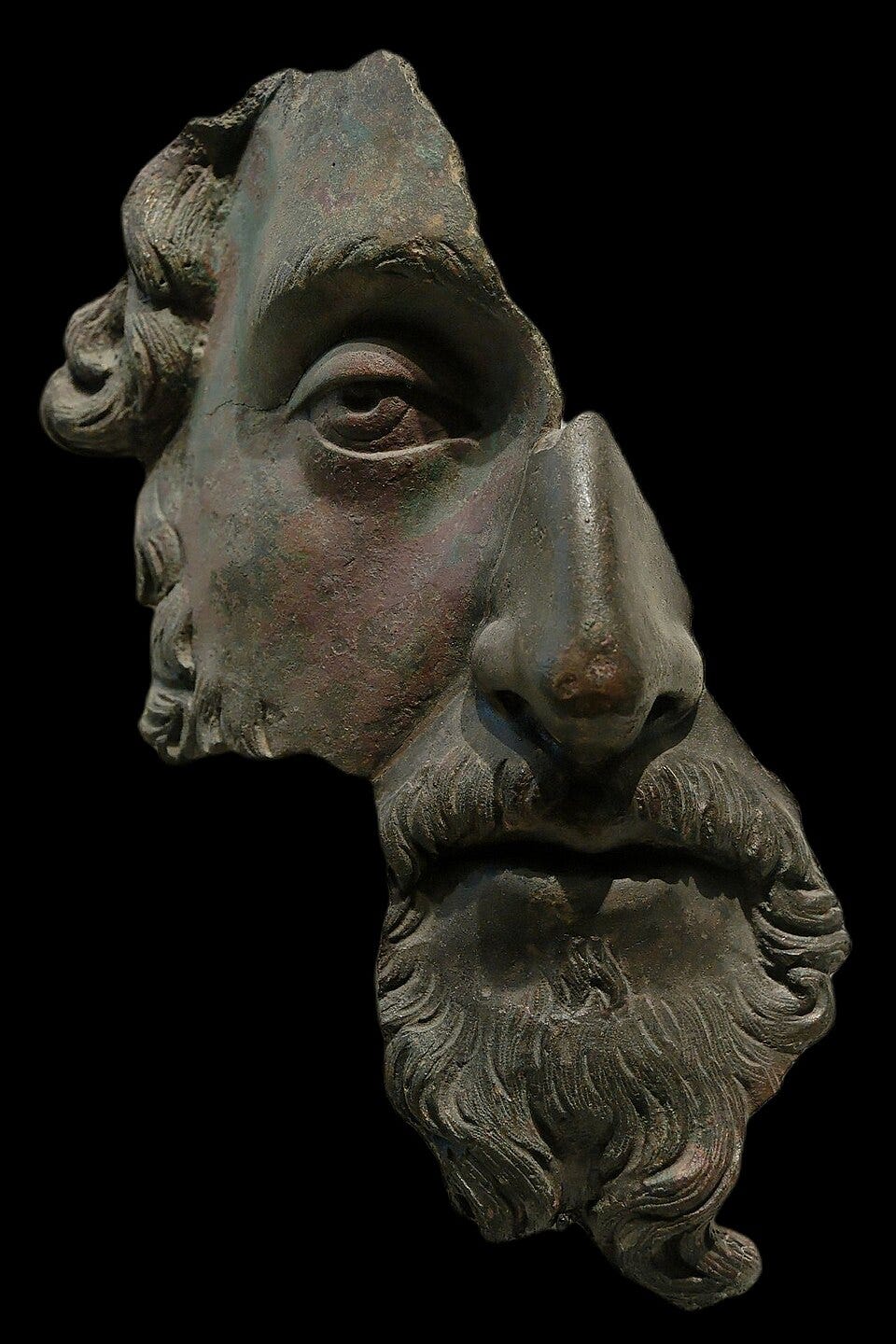
Only “once in the history of the world,” Alice Zimmern wrote, has a man fulfilled Plato’s vision of a philosopher-king, a world-class ruler who was also a peerless mind. He was Marcus Aurelius.
As emperor of Rome in the second century CE, Aurelius moonlit as a dispenser of aphoristic gems about life, death, and honor. His private journal, now known as his Meditations, is a compendium of notes-to-self, maxims, and Stoic writings, which Aurelius composed while planning and carrying out a military campaign in Europe. Never intended for broad publication, the book has nonetheless become one of the most-published works of philosophy in history. It is hard to think of a person more powerful in his life whose words have been read so frequently in his afterlife.
One might expect such a person to be a paragon of good judgment. But rather than select a proven statesman to lead the fragile empire—as many good emperors of the previous century had done—Aurelius elevated his troubled biological son, Commodus. In the view of Edward Gibbon, the historian who wrote The Decline and Fall of the Roman Empire, Commodus’ reign was the beginning of the end for Rome. Lazy, vain, and self-indulgent, Commodus allowed corruption to fester and order to crumble. “The monstrous vices of the son,” Gibbon wrote, “have cast a shade on the purity of the father’s motives”, as Aurelius “sacrificed the happiness of millions to a fond partiality for a worthless boy.”
I sometimes think about the thousands of executives and entrepreneurs who read Meditations over and over and fail to absorb the lesson buried in its biographical introduction. In the privacy of his tents and chambers, Marcus Aurelius articulated the virtues of judgment as well as anyone. But when it came to the most significant judgment of his own life, Aurelius handed off his kingdom to a nincompoop whose reign accelerated the demise of the Roman Empire.
When, you might think, has a leader so wise ever proven so incompetent at that most essential job: Naming a successor who doesn’t threaten to destroy his legacy?
Hollywood
When Bob Iger stepped down as CEO of The Walt Disney Company for the first time, in early 2020, he was coming off one of the greatest runs in modern corporate history. Unlike Aurelius, Iger did not inherit an empire at its peak. In 2005, Disney’s animation studio was a mess, its feature films struggled at the box office, and theme-park attendance had flattened after the post-9/11 slump.
Between 2005 and 2020, Iger went on a triumphant shopping spree, bagging Pixar, Marvel, and Star Wars. Just when Disney’s trunk seemed so stuffed with intellectual property that surely nothing more could fit, he managed to squeeze in the voluminous assets of 21st Century Fox. Throughout the 2010s, Disney pumped out billion-dollar hit after hit, plumbing its unrivaled library of titles for sequels, prequels, adaptations, and reboots that dominated the box office and rewrote the rules of Hollywood.
With the stock at all-time highs, Iger finally named a successor: Bob Chapek, the head of Disney’s theme park division. The results were dismal.
Chapek’s failures, which coincided with the pandemic, extended from box office disappointments to a political mess over Florida’s “Don’t Say Gay” bill. But the failure of Bob II reflected as poorly on Bob I. As the New York Times reported, Iger repeatedly “undermined” his successor and failed to build a credible runway, leaving Chapek weakened, the board unsettled, and Disney without a clear “next chapter.”1
In 2022, Iger returned to the company weakened in part by his own botched succession planning, like a doctor heading back into the O.R. to staunch the bleeding from a wound he helped to inflict. Thus did the smoothest executive in showbiz oversee one of the industry’s most turbulent and least successful corporate handoffs.
New England
Bill Belichick is the greatest coach in NFL history. In a league whose rules are designed to promote parity and break up dynasties, Belichick coached Tom Brady and the New England Patriots to the most-ever wins in a 10-year period; the most-ever consecutive conference championship appearances; the most consecutive division titles; and the most Super Bowl wins (six, which is tied with the Pittsburgh Steelers, but accomplished in one continuous tenure rather than over a half century).
But the same man whose fussy mastery of football made him an infamous pain in the ass was significantly less masterful in charting the end of his career. In early 2024, the Patriots elevated Jerod Mayo—then a young linebackers coach and former Patriots player—to head coach, positioning him as Belichick’s successor. The promise of continuity was central. Mayo had grown up in the organization and had Belichick’s blessing; owner Robert Kraft later revealed that Mayo had been identified for the job years in advance, according to Bleacher Report. But the parts of the succession puzzle that matter most—a clear timeline, the transition of authority, and preparation for leadership—were left fuzzy.
The experiment failed almost immediately. Mayo’s first season ended in a 4-13 record, and the team finished last in its division. The board and Kraft pulled the plug on Mayo after just one season, publicly admitting that they had put him in an “untenable situation.” As if to punctuate the awfulness of the initial succession planning, the Patriots made the Super Bowl the very next year under a different head coach. Jerod Mayo is currently not employed by any NFL team.
***
“The major job of leaders is to develop other leaders,” the management expert Noel Tichy once wrote. But corporate and political history is full of towering figures who gave way to fools and incompetents.
Call it the Aurelius Trap. Strong leaders often fail to do the most important thing in leadership, which is to plan for a successor who can extend their time-bound term into a longer legacy. They have a tendency to make themselves indispensable and irreplaceable—and then prove themselves right by handing the reins to a leader who fails to replace them.
The question of why it is so hard for great leaders to finish the job is interesting enough that it does not require a news peg. But its significance will only grow in the next few years, given the advanced age of modern American leadership. As the Yale professor Samuel Moyn writes in his new book Gerontocracy in America, the political and business worlds are older than ever. In the S&P 500, chief executives are ten-times more likely to be over 70 years old than under 40. Boomers have so dominated American politics that we’ve had more presidents born in the summer of 1946 (three: Bill Clinton, George W. Bush, and Donald Trump) than in all the years after 1946 (one: Barack Obama, born 1961). Our last two presidents have been the two oldest in American history.
A successful handoff from one generation to the next is self-evidently critical in politics. In business, it’s a nine-figure decision. A 2021 study found that the market value wiped out by “badly managed CEO and C-suite transitions” across the largest publicly traded companies was close to 20 percent of annual investor gains. By this measure, the question of why succession planning so often goes wrong is worth, literally, trillions of dollars.
In the reporting for this essay, I read dozens of papers and consulted several leadership researchers. In my best effort to synthesize the wisdom of these resources, I’ve boiled down this literature to four big theories about why great leaders are so bad at what might be their most important job. While no simple summary of their findings can fit inside of one sentence, the best I can offer is this two-sentence summary:
